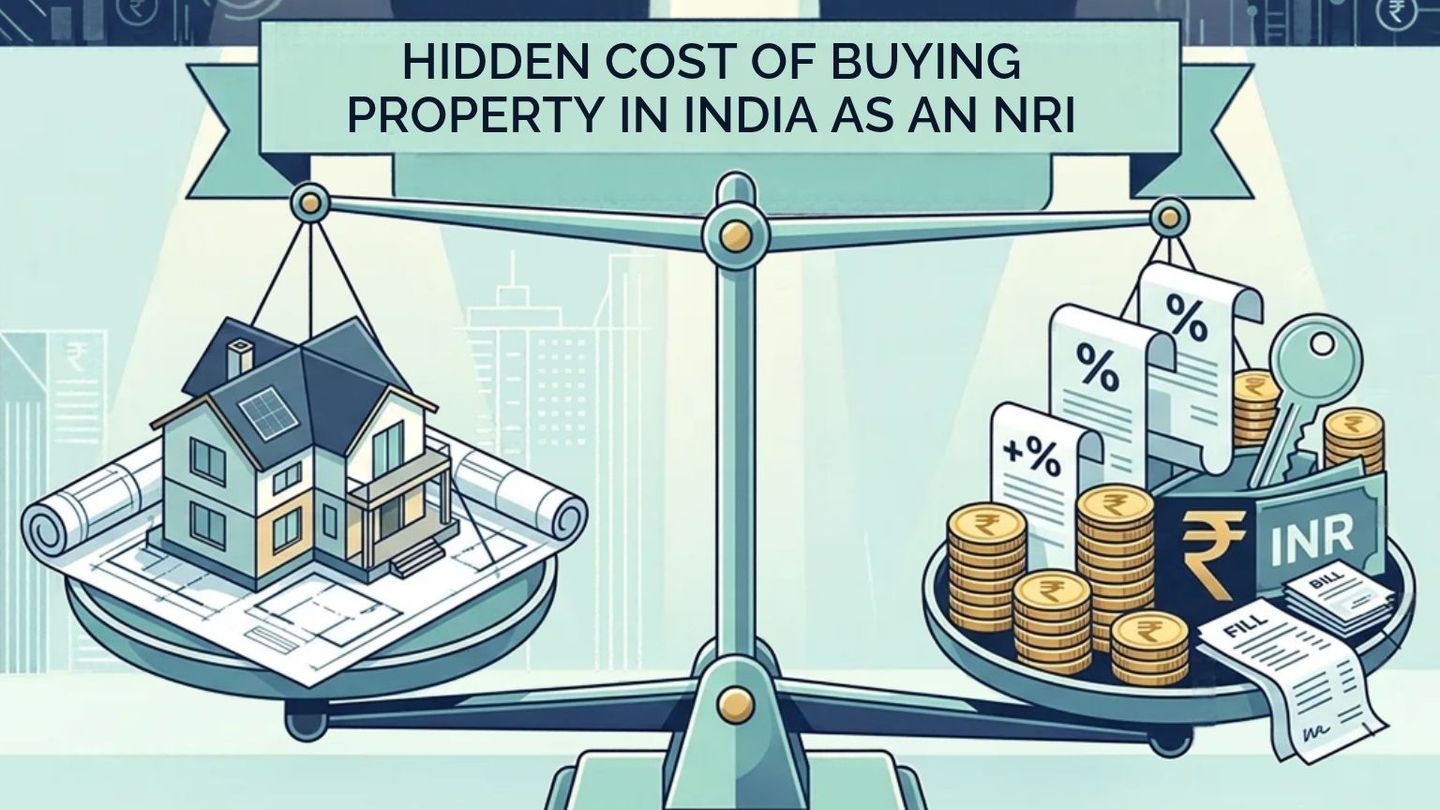
Hidden Costs of Buying Property in India as an NRI: The Complete Guide
Buying property in India as an NRI? The advertised price is only the beginning. Stamp duty, registration, GST, taxes, bank charges, maintenance deposits, interiors, and foreign-exchange costs can significantly increase what you ultimately pay. For NRIs, buying property can be even more challenging since many purchases happen from abroad. Missing a cost early on can turn into a surprise expense later, especially when you’re making payments from overseas.
At prOPIUM, we believe you should evaluate a property by its Total Cost of Ownership (TCO), not just its quoted price. This guide explains the major and often-overlooked expenses NRIs should account for before purchasing residential property in India.
Stamp Duty and Registration Charges
Beyond the property price, stamp duty and registration charges are among the highest extra costs you’ll face. Since each state sets stamp duty, the rate, how it’s calculated, and any discounts or registration fees can vary widely depending on where your property is.
For example, a property purchased in Gurgaon may have a different stamp-duty structure from one purchased in Mumbai, Bengaluru or Hyderabad. The applicable duty may also vary based on factors such as the buyer's gender, ownership structure and the property's assessed value. Registration charges are payable to register the sale deed formally. Buyers should also establish whether stamp duty will be calculated on the agreement value, the government-prescribed circle rate or another applicable valuation basis.
What NRIs should do: Obtain a written estimate of stamp duty and registration charges for the specific property and ownership structure before committing to the purchase. Do not rely solely on a broker's approximate calculation.
GST on Under-Construction Property
GST can materially increase the purchase cost of an under-construction property. Under the commonly applicable residential real-estate scheme, GST is generally charged at 5% for non-affordable residential apartments and 1% for qualifying affordable residential apartments, subject to the applicable conditions. These rates generally apply without the developer claiming input tax credit under the scheme.
When you sell a property that’s already complete either it’s got a completion certificate, or someone’s already living there GST generally isn’t charged on the sale price. Just remember, though, that any extra services or fees tied to the sale may still carry their own taxes. For NRIs comparing a ready-to-move apartment with an under-construction one, the GST difference can influence the total acquisition cost.
For example, on a taxable base of ₹2 crore, 5% GST would amount to ₹10 lakh. The actual GST calculation depends on the applicable scheme, qualifying deductions and the transaction's facts.
What NRIs should do: Ask the developer for a cost sheet that clearly identifies the taxable value, applicable GST rate and amount. Confirm the treatment with a tax professional rather than assuming that every charge attracts the same rate.
PLC, Floor-Rise and Other Developer Charges
A property's advertised price may not include every amount payable to the developer. Depending on the project, the following may be charged separately:
- Preferential Location Charges (PLC): For park-facing, corner, pool-facing or other premium locations.
- Floor-rise charges: Where applicable, for apartments on higher floors.
- Parking charges: Confirm the number of spaces included and whether any additional amount is payable.
- Club membership: One-time membership or access charges.
- Power-backup charges: Charges associated with backup capacity or infrastructure.
- Utility and infrastructure charges: Amounts relating to electricity, water, infrastructure or other facilities.
- Lease rent or external development charges: Where applicable under the project and allotment terms.
Some charges might already be part of the base price or could be limited by legal or contract terms. It’s important to check the agreement carefully instead of guessing what’s included or extra.
What NRIs should do: Request an itemised cost sheet and reconcile it with the allotment letter, agreement for sale and payment schedule.
Advance Maintenance, Club Deposits and Corpus Funds
Developers or associations may collect amounts towards maintenance, common-area upkeep, sinking funds, infrastructure or other permitted purposes. Depending on the project, these can include:
- Advance maintenance for an initial period.
- Interest-free maintenance security deposits.
- Sinking or replacement funds.
- Residents' association or society charges.
- Club or amenity deposits.
- Electricity, water and other utility deposits.
These costs are important because you may need to pay them before you even get possession, sometimes along with your last payment and other handover charges. So, an apartment with a lower advertised price might actually need more upfront cash than another property with a higher price tag.
What NRIs should do: Separate refundable deposits, non-refundable charges and recurring expenses. Confirm when each amount is payable, who receives it and whether it attracts GST.
TDS When Buying Property from an NRI Seller
One of the most important tax-related costs to understand arises when an NRI purchases property from another NRI. The withholding-tax rules depend significantly on the seller's residential status for Indian income-tax purposes. The familiar 1% TDS rule for certain purchases from resident sellers should not automatically be applied to a purchase from a non-resident seller.
For transactions covered by the current non-resident provisions, the buyer must comply with the applicable withholding rules, including the relevant provisions of the Income-tax Act, 2025. The amount to be withheld can depend on the seller's tax position, the nature of the capital gain, the applicable rate and whether a lower or nil deduction certificate is available.
From 1 October 2026, the Income Tax Department provides for a resident individual or HUF buying immovable property from a non-resident to report the relevant transaction through Schedule E of Form 141, without requiring a TAN for that transaction. Other buyer categories must follow their applicable procedures. This is particularly important for NRIs buying resale property from another NRI. Incorrect withholding can expose the buyer to tax demands, interest and potential penalties.
What NRIs should do: Confirm the seller's tax residential status, get advice on the applicable withholding amount and filing process, and ensure the agreement clearly addresses the tax deduction and payment mechanics.
Home Loan Processing and Financing Costs
NRIs may finance a property purchase through an eligible Indian lender, subject to the lender's requirements and applicable regulations. However, the loan's advertised interest rate does not reflect its full cost. Additional expenses may include:
- Loan-processing fees.
- Legal and technical valuation charges.
- Documentation and administrative fees.
- Mortgage-related stamp duty or registration costs, where applicable.
- Insurance required or offered as part of the lending arrangement.
- Charges for specific repayment or servicing arrangements.
- Currency conversion and remittance expenses associated with making payments.
The way your loan is set up also makes a difference. As an NRI, your eligibility, paperwork, income checks, repayment options, and loan terms may not be the same as those for residents.
What NRIs should do: Compare the effective borrowing cost, not just the interest rate. Ask the lender for a complete schedule of upfront and recurring charges before accepting the loan offer.
Foreign-Exchange Conversion and International Remittance Costs
For NRIs earning in US dollars, pounds, euros, dirhams or another foreign currency, exchange-rate movements can affect the rupee cost of buying property.
If you need to send ₹2 crore to India, the final amount taken from your overseas account will depend on the exchange rate at the time, the bank’s conversion fees, and any extra transfer charges. Even a tiny fluctuation in the exchange rate can make a huge difference with such a large amount. If you pay in multiple instalments, you’ll have to deal with changing exchange rates every time you transfer money. Other potential costs include intermediary-bank charges and transfer fees imposed by the sending or receiving institution.
What NRIs should do: Compare the total rupee amount the recipient will receive, rather than looking only at the advertised exchange rate. Plan remittances around actual payment deadlines and retain records of the source and movement of funds. The appropriate banking route also depends on the nature of the funds and the transaction. NRE and NRO accounts serve different purposes, so review their use in the context of applicable FEMA and banking rules.
Legal Due Diligence and Documentation
When you’re buying property from afar, legal due diligence becomes even more crucial. Even if a property looks perfect in a brochure, you still need to thoroughly check who really owns it, whether all approvals are in place, whether there are any debts or claims against it, and what the contracts actually say. Depending on the property, legal and professional expenses may include:
- Title verification and review of ownership documents.
- Checks of encumbrances and existing loans.
- Verification of RERA registration and project approvals, where applicable.
- Review of the sale agreement, allotment letter and payment schedule.
- Verification of completion or occupancy documentation for completed projects.
- Review of land-use permissions and other relevant approvals.
- Legal assistance with a Power of Attorney (POA).
- Authentication, attestation, stamping or registration of documents where required.
These checks might cost extra, but they can help you spot issues that would be much more expensive to fix after you buy the property. POA can allow an authorised representative to carry out specified tasks in India. It does not, by itself, establish ownership of the property or remove the need for proper verification.
What NRIs should do: Appoint an independent property lawyer to review the transaction. Avoid relying exclusively on the developer, seller or intermediary for legal confirmation.
Interior Work, Furnishing and Move-In Expenses
Your spending doesn’t stop once the sale deed is signed or you get the keys to your apartment. Depending on the property's condition and specifications, the buyer may need to budget for modular kitchen wardrobes, lighting, electrical fittings, appliances, air-conditioning, curtains, furniture, furnishings, painting, repairs & finishing work, internet, smart-home equipment, security systems, ousekeeping and move-in services.
A furnished or fully equipped apartment might cost more at first, but you’ll spend less getting it ready. On the other hand, an unfurnished place could need a lot more investment before you can use or rent it.
What NRIs should do: Set a realistic interior budget based on the property's intended use. If you are buying the apartment as an investment, distinguish essential tenant-ready work from optional upgrades that may not increase rental income proportionately.
Property Management and Maintenance While You Are Abroad
An NRI who does not live in India may need local assistance to manage the property. Ongoing costs can include:
- Monthly maintenance and association charges.
- Property-management fees.
- Tenant sourcing and brokerage.
- Rent collection and accounting.
- Repairs, replacements and emergency maintenance.
- Periodic inspections and housekeeping.
- Vacancy-related costs and unpaid utility bills.
An empty apartment still costs money, even if you’re not earning rent. If you rent it out, remember to factor in tenant changes, repairs, and times when it might be vacant.
What NRIs should do: Estimate annual operating costs and expected vacancy before calculating rental yield. A property that appears attractive on gross rent may deliver a much lower net yield after expenses.
Property Tax, Rental Tax and Compliance Costs
Owning property in India may create continuing tax and compliance obligations. Depending on the circumstances, these may include municipal property tax, income tax on rental income, tax-related professional fees and applicable withholding obligations.
Rental income earned in India may be taxable in India even if the owner lives overseas. The final treatment depends on the applicable tax provisions, deductions, residential status and any relevant Double Taxation Avoidance Agreement. If the property is rented out, the owner should also understand the applicable TDS obligations and the documentation needed to claim tax credits or relief.
What NRIs should do: Estimate annual property tax, maintenance and tax-compliance costs before purchasing. If the property will be rented out, calculate the expected net rental income after expenses and taxes rather than relying on gross rent.
Insurance and Unexpected Repairs
Insurance is another cost you may overlook during the purchase process. Depending on the property and the owner's needs, cover may be considered for the building, contents and certain risks. There may also be expenses associated with plumbing, electrical faults, waterproofing, appliances or other repairs. For an under-construction property, the buyer should understand the contractual allocation of responsibility for defects and the process for raising complaints during the applicable defect-liability period.
What NRIs should do: Budget for routine repairs and an emergency reserve. Review the available insurance options and the limits of any cover provided by the developer or association.
Opportunity Cost and Payment-Plan Risk
Some costs aren’t obvious on paper. Money tied up in a property isn’t available for other uses while you own it. For an under-construction apartment, instalments may be paid over several years before possession or rental income begins. During that time, the buyer may also face rent or housing expenses in their home country.
If construction is delayed, you might wait even longer. Paying a lot upfront can limit your flexibility, while a payment plan linked to construction progress can make it hard to predict when you’ll need to pay each instalment.
What NRIs should do: Evaluate the payment plan alongside the purchase price. Consider when capital will be deployed, when possession is expected, when rental income may begin and how the investment compares with alternative uses of the funds.
Exit Costs: Selling the Property Later
The cost of owning property also includes the expenses that may arise when it is eventually sold. Potential costs include:
- Brokerage and marketing expenses.
- Legal documentation and transaction support.
- Tax on capital gains, where applicable.
- TDS withholding on the sale by a non-resident seller.
- Bank charges and currency conversion.
- Compliance and documentation required to remit eligible sale proceeds overseas.
When you sell, the tax that’s initially taken out might not match what you actually owe. What you end up paying can vary based on your specific situation and the details of the sale. In some cases, you may qualify for a certificate that lets you pay less or even avoid the tax altogether. Repatriation of sale proceeds is also subject to applicable FEMA rules, the source of funds and the conditions governing the transaction. An NRI should not assume that the entire sale amount can automatically be transferred overseas without documentation or restrictions.
What NRIs should do: Consider the likely exit route before purchasing. A property that is easy to acquire but difficult or expensive to sell and repatriate may not be the best investment.
A Practical NRI Property Cost Checklist
Before making a final decision, ask the developer, seller, lender and legal adviser to confirm the following.
- Base price and all additional developer charges.
- Stamp duty and registration expenses.ds
- GST, if applicable.
- Parking, PLC, floor-rise and club charges.
- Maintenance advances, deposits and corpus contributions.
- TDS and other tax obligations arising from the specific transaction.
- Loan processing, legal and valuation fees.
- Remittance and currency-conversion costs.
- Legal due diligence and POA expenses.
- Interior, furnishing and move-in budget.
- Annual maintenance, property tax and management fees.
- Insurance and repair reserves.
- Expected vacancy and rental operating costs.
- Likely brokerage, tax and repatriation costs on exit.
Not all of these costs will apply to every property. The checklist helps you figure out which ones matter, when you’ll need to pay them, and if they’re refundable, recurring, or just one-time charges.
How to Calculate the Total Cost of Ownership
A useful way to compare properties is to calculate their total cost rather than comparing their headline prices. Total acquisition cost can be estimated as: Base property price + applicable GST + stamp duty + registration charges + developer add-ons + transaction and financing costs.
For a more complete picture, add the expected cost of interiors, initial deposits and other expenses required to make the property usable. Then estimate annual ownership expenses such as maintenance, property tax, insurance, management fees and repairs. For an investment property, compare the resulting costs with expected rental income, likely vacancy and the eventual cost of selling the property.
Illustrative example
Assume an NRI is evaluating an under-construction apartment with a quoted base price of ₹2 crore. The following figures are hypothetical and are provided only to demonstrate the calculation.
Cost component | Illustrative amount |
Base property price | ₹2,00,00,000 |
GST, assumed at 5% of the full base price for illustration | ₹10,00,000 |
Stamp duty and registration | ₹12,00,000 |
PLC, parking and other developer charges | ₹5,00,000 |
Legal, loan and transaction expenses | ₹2,00,000 |
Initial interiors and furnishing | ₹8,00,000 |
Illustrative total initial outlay | ₹2,37,00,000 |
In this example, a property listed at ₹2 crore would actually need about ₹2.37 crore upfront, before you even start paying for ongoing costs. This is not a quote or a universal cost estimate. The GST base and eligibility, stamp duty, registration fees, additional charges and transaction expenses will vary. Some costs may already be included in the base price, while others may not apply.
The key lesson is simple: the advertised price and the actual acquisition cost can differ materially.
FAQ’s
What are the main hidden costs of buying property in India as an NRI?
Main costs can include stamp duty, registration, GST on eligible under-construction property, developer add-on charges, maintenance deposits, loan fees, remittance expenses, legal due diligence, interiors, and ongoing property-management costs. The applicable items depend on the property, location and transaction.
Do NRIs pay GST when buying property in India?
GST generally applies to qualifying under-construction residential property transactions under the applicable real estate scheme. A completed property sold after the relevant completion certificate or first occupation, as applicable, is generally outside GST on the sale itself. Buyers should verify the property's status and the applicable tax treatment.
Is TDS applicable when an NRI buys property from another NRI?
Yes, withholding obligations may apply. The rules differ from the familiar 1% TDS rule applicable to certain purchases from resident sellers. The buyer must determine the correct current provisions, withholding amount and reporting process based on the seller's status and the transaction.
Can an NRI include property expenses in the rental-yield calculation?
Yes. A meaningful rental-yield calculation should account for recurring maintenance, property tax, property-management fees, repairs, vacancy and relevant taxes. Gross rental yield alone can overstate the return the owner actually receives.
Can an NRI pay for a property entirely from overseas funds?
NRIs may purchase eligible immovable property in India subject to FEMA and other applicable requirements. Check the permitted property types, payment channels, and documentation for the individual's circumstances. Agricultural land, plantation property and farmhouses are generally subject to separate restrictions.
How much should an NRI budget over and above the property price?
No universal percentage applies to every purchase. The additional amount depends on the state, property type, construction status, GST applicability, developer charges, financing, interiors and the buyer's intended use. Obtain a transaction-specific cost sheet rather than relying on a generic estimate.
What is the best way to avoid hidden costs?
Request an itemized cost sheet, verify it against the contractual documents, obtain independent legal and tax advice, confirm all government charges and build a separate budget for interiors and annual ownership. A Total Cost of Ownership calculation helps make competing properties easier to compare.
Conclusion
For NRIs, buying property in India is not simply a question of selecting the right city, developer or apartment. It is also about understanding the full financial commitment from acquisition to eventual exit. A property that seems cheaper at first might end up costing more after you add taxes, developer fees, loan costs, interiors, and maintenance. Sometimes, a higher-priced property is actually a better deal if it has good features, lower running costs, strong rental potential, and better resale value.
The right question is not merely, “What is the price of this property?” It is: “What will this property actually cost me to own, maintain and eventually sell?”
At prOPIUM, we think this approach is key to making smart real estate decisions. Looking at the Total Cost of Ownership, along with location, developer reputation, quality, payment plan, and investment potential, helps NRIs choose based on real value, not just the sticker price.
Disclaimer: This article is for general educational purposes and does not constitute tax, legal or financial advice. FEMA regulations, account eligibility, tax treatment and repatriation requirements may change. NRIs should confirm the applicable requirements with their bank and a qualified professional before undertaking a property transaction.