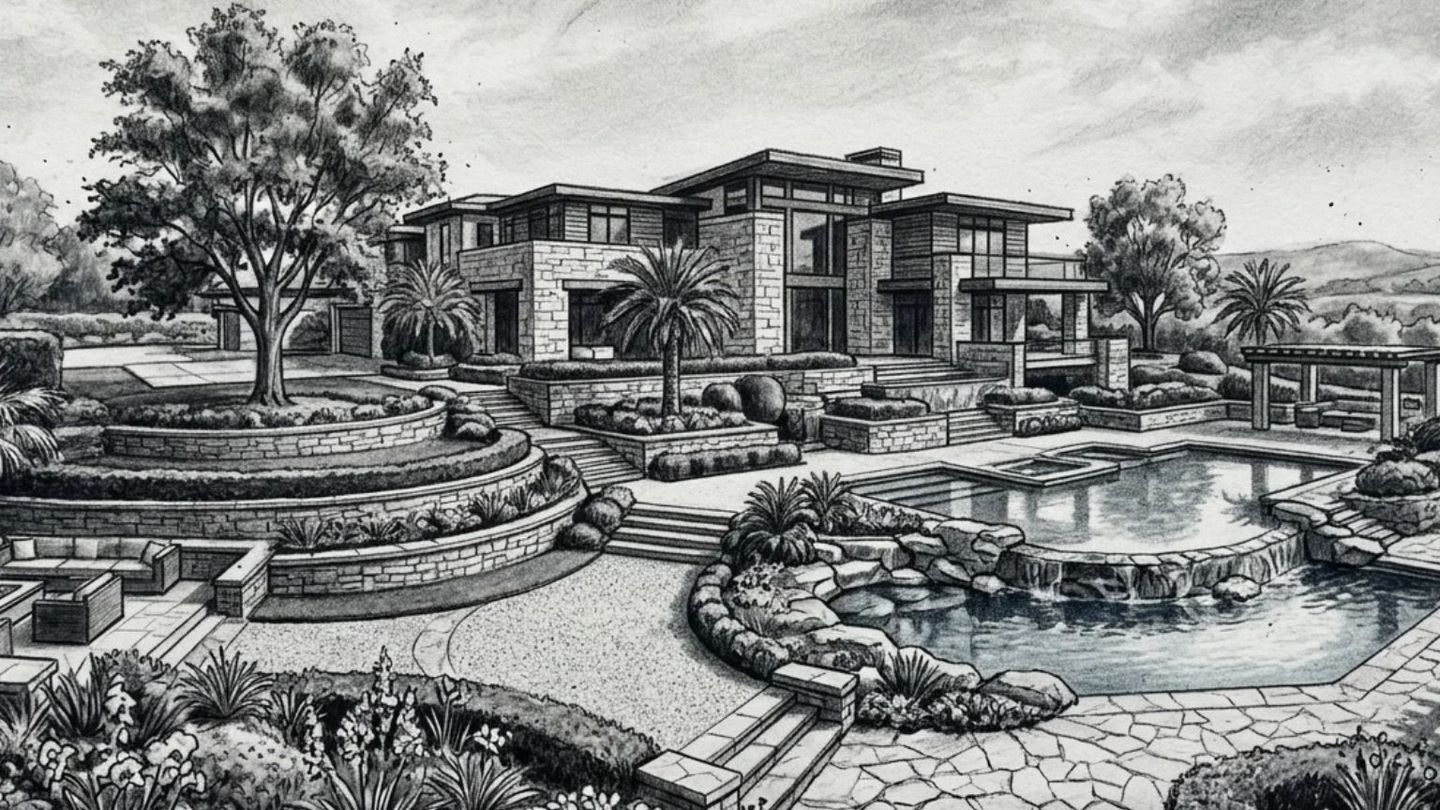
The New Luxury in Real Estate: When Landscape Becomes the Real Asset
For years, luxury real estate had a very familiar script. If you asked anyone in the market what defined a premium home, the answers would come fast: Italian marble floors, imported fittings, double-height lobbies, private elevators, extravagant clubhouses, infinity pools, and of course, “the view.” These were the must-haves, the talking points, the checklist items that signaled luxury. But walk through the newest, most thoughtfully designed developments today, and you’ll sense a quiet shift. The very definition of luxury is changing, moving away from just what’s inside the four walls, and focusing more on what surrounds your home. Landscape not just as a decorative afterthought, but as a central part of the experience is emerging as one of the most important, and often underestimated, assets in luxury real estate.
It’s Not Landscaping. It’s Landscape.
There is a significant distinction between treating landscaping as merely a form of decoration for example, with some lawns or neatly clipped hedges and considering it an essential element of the design. Present-day new developments now plan the landscape right from the start, rather than treating it as an afterthought.
- Where should the towers sit to best use the natural setting?
- Which mature trees could be preserved?
- How can walking trails wind through the greens, so every step feels like a retreat?
- Can apartments look into leafy courtyards instead of another tower?
- Where can water bodies, gardens, and shaded outdoor hangouts create a true sense of arrival?
Such questions are no longer merely concerned with architecture; they have now become real estate issues, and the answers to them will determine the future of luxury living.
The Value That Can’t Be Built Overnight!
Here’s something to think about: a clubhouse can be built in a year or two. A mature tree? That takes decades. Developers can add another gym, lounge, or indoor pool fairly quickly, but you cannot rush the growth of a lush canopy or the establishment of an entire ecosystem. Landscape, uniquely, gets better with age. A garden that looks impressive at possession can be truly magical ten or fifteen years later, when trees are fully grown, and the space has developed its own character. This asset increases in value with time, whereas most interiors tend to become outdated as the years go by.
Luxury Is Increasingly About the Space Between Buildings
There is another change in the way buyers assess luxury homes. Instead of asking themselves, "How big is the apartment?", they now usually ask, "How much real life there is outside the apartment?"
A 3,000 sq. ft. home surrounded by towers can sometimes feel less luxurious than a modest apartment that opens into a green courtyard or a tree-lined pedestrian path. Two projects may have similar apartment sizes and the same specs, but the one with better landscape planning and fewer obstructions feels more special. The real value isn’t always in the size of the apartment. It’s in the quality of the environment: the feeling of openness, the calm, and the sense of space that extends beyond the walls.
The Wellness Premium
The pandemic changed what people look for in their homes. Outdoor space is no longer a luxury, it’s a necessity, a non-negotiable part of a good home. That preference has lasted. Buyers now look for walking trails, quiet lawns, water bodies, shady corners for reading or meditation, and safe outdoor spaces for kids to play. In the case of luxury housing, customers are not merely purchasing a place to live; they are acquiring a way of life. They desire their morning walk, their coffee under a tree, and their first sight of the day to be green and vibrant rather than just another concrete exterior. Indeed, landscape becomes a wellness feature in its own right.
Privacy: The Newest Luxury
We usually imagine luxury as having more and more space, more features, more everything. But these days, real luxury often means simply having fewer people around you. When the landscape is thoughtfully designed, it does more than look beautiful. It gives each resident a little sanctuary. Tree groves, cozy courtyards, and winding pathways aren’t just for show they naturally create pockets of privacy and quiet, even when you’re right in the middle of a bustling city. In dense urban markets like Gurgaon, Mumbai, Bengaluru, and Delhi NCR, waking up surrounded by trees or walking through open greens is becoming extraordinarily valuable.
Not All Green Is Luxury
It's tempting to believe that a greater amount of green space means better design, but not all open space is the same. A project might claim to have 80% open space and yet still appear uninspired if the space consists only of decorative grass. The actual issue is one of quality:
- Is it usable and accessible?
- Is there real shade, biodiversity, and mature trees?
- Can you actually walk through it, relax, or play?
- Is the landscape woven into the architecture, or just tacked on?
Advanced buyers are learning to go beyond the proportion of green space given in the brochure and are concentrating instead on the experience that the landscape in fact provides.
Landscape: The Next Way to Compare Projects
For buyers, this shift is an opportunity. Instead of just comparing apartment size, specs, amenities, location, and price, ask the deeper questions:
- What’s the landscape strategy?
- How much of the site is truly usable open space?
- How many mature trees will be there?
- Are there long walking trails, and are cars separated from pedestrians?
- How close is your home to greenery?
- What will the project look and feel like ten years from now?
Questions like these could soon become just as important as questions about the gym or the pool.
The Next Definition of Luxury
For decades, luxury real estate has been about adding more: more amenities, more finishes, more technology, more services. But the next phase could be about subtracting less visual clutter, less traffic, less noise, less density and focusing on what money can’t easily buy: space, privacy, mature trees, tranquility, and time. Landscape isn’t just the green layer between buildings. It shapes how a property feels, how residents live, how a development ages, and how unique it stays year after year. The future of luxury real estate may not be about building more spectacular towers, but about creating better environments around them. Because at the end of the day, luxury isn’t just the apartment you buy. It’s the world you wake up to every morning.
FAQ's
Isn't landscaping just a decorative add-on to a luxury project?
Not anymore. Today's developments plan landscape from the very start of design, considering tower placement, tree preservation, and walking trails as core to the project, not an afterthought.
Why is landscape considered a unique, long-term asset?
Unlike a clubhouse or gym that can be built in a year or two, mature trees and established greenery take decades to develop, meaning landscape actually increases in value over time, unlike interiors that age.
Does apartment size still matter more than surrounding green space?
Not necessarily. A smaller apartment opening into a tree-lined courtyard can feel more luxurious than a larger one surrounded by towers, since buyers increasingly value the quality of the environment outside their walls.
Why has outdoor space become such a priority for buyers?
Since the pandemic, outdoor space has shifted from a luxury to a necessity. Buyers now actively seek walking trails, quiet lawns, and safe outdoor areas as part of a healthier lifestyle.
Does thoughtfully designed landscape also affect privacy?
Yes. Tree groves, courtyards, and winding pathways naturally create pockets of privacy and calm, even within dense urban markets like Gurgaon or Mumbai.
Does a high percentage of "open space" in a brochure guarantee good landscape design?
No. Quality matters more than quantity, buyers should check if the space is genuinely usable, shaded, biodiverse, and well-integrated into the architecture, not just decorative grass.
What questions should buyers ask to evaluate a project's landscape strategy?
Ask about the amount of truly usable open space, the number of mature trees, whether pedestrians are separated from vehicles, and what the project will look and feel like a decade from now.